Overland Expedition Planning: Expedition Preparation
Overlanding Skills
Expedition Planning Part 2
Overland Expedition Planning: Expedition Preparation
This is the second of three articles on our overland expedition trip planning process.
The focus of the first article was on the process we use to develop our itineraries. The focus of this article is on the steps we take to prepare for each expedition. And the focus of the third article is on the resources and tools that we use to develop our itineraries and prepare for each expedition. We hope you find this overland expedition planning guide useful.
Phase 1: Defining the Goals of Our Expedition and Making a Go/No Go Decision
The first phase of our planning process involves thinking about why we want to pursue each overland expedition and making a go/ no go decision.
As part of this process, we think about the goals of each expedition and determine whether we can achieve many or most of them. We also develop a high-level budget for the trip and ensure that we can afford it.
One of the hardest parts of any overland expedition is making the go/no go decision, in large part because overland expeditions are complex and expensive. See this blog post for the process that we use to make these decisions.
Phase 2: High Level Planning
Phase 2 of our planning process often begins a year or more before each overland expedition and involves the following steps:
Communication – We determine how we are going to communicate in different languages during our trip. If we are going to be spending a lot of time in one country, we start learning the language as soon as possible. One of our favorite resources is The Paul Noble Method by Paul Noble that we have been using to learn Spanish and French. When we are traveling, we also use Apple Translate with AirPods to communicate in different languages. However, it’s always better to be able to hold basic conversations and pronounce translated phrases ourselves.
Connectivity: We determine how we are going to maintain internet connectivity and make phone calls during our trip. We use Starlink for internet access in our vehicle. We also purchase eSIMs in each country that we plan to spend a significant amount of time in. It can be difficult to purchase eSIMs in some countries. For example, in France, providers typically require proof of address.
Cooking: We determine how we are going to cook in our overland vehicle. We do this during Phase 2 of our planning process because it influences vehicle selection and options. Induction stoves are efficient but consume power, while gas stoves require refilling propane bottles and can be harder to repair.
Family: We decide how often we are going to visit family during our trip and have open conversations with them about our plans. This is especially important when elderly parents are involved.
Financial Planning: We develop a budget for our trip, gathering input from other overlanders who have completed similar trips and using ChatGPT. It’s always challenging to develop an accurate budget. As a result, we almost always adjust our budget during the first few months of our trip.
Health: We determine how we are going to stay in shape during our trip. We use biking, hiking, and even walking to maintain our aerobic fitness and develop a strength-training plan. During our trip through Europe, for example, our goal is to go to the gym once or twice a week and supplement that with bodyweight strength training.
Healthcare Insurance: We determine what kind of healthcare coverage we will have during our expedition and how we will handle both routine and emergency health issues. Most US-based healthcare insurance plans do not cover care outside the U.S. Most global healthcare insurance plans also aren’t that comprehensive. As a result, we generally try to buy a catastrophic healthcare insurance plan in the US and then pay out-of-pocket for healthcare, including preventative care, during our trip. Since catastrophic healthcare insurance plans typically have high deductibles, we often don’t end up spending more on out-of-pocket healthcare costs than we would have spent on healthcare up to our deductible in the US. We also determine how we are going to get prescriptions refilled during our trip. For example, during our trip through Europe, northern Africa, and western Asia, we used online doctor services, such as Mediquo in Spain, to get our prescriptions renewed.
Home: We determine what we are going to do with our home (if we have one) and our personal possessions while we are away.
Immigration: We determine whether we need a visa or visas for our trip and research how long we can stay in each country. We also research the tax implications of becoming a resident or obtaining a long-term visa if we choose to go down one of these routes.
Pets: Since we have Oz, we research the import requirements for the countries we are planning to explore. We found there is no single comprehensive resource for this, and Facebook groups often provide incomplete or inconsistent information. As a result, our best results came from speaking directly with people who have gone through the process recently. This is a complex process, so be prepared for one that requires persistence and can be frustrating.
Shipping (of Our Gear): We determine how we are going to get our gear to the start of our trip if we’re not driving to it.
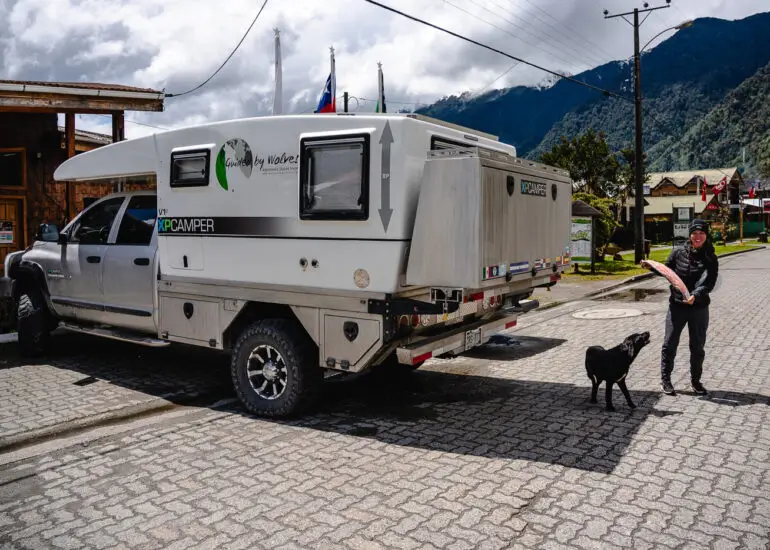
Vehicle: We determine the kind of vehicle we are going to use for our expedition, where we are going to buy it, how we are going to insure it, and how we are going to get it to the start of our expedition. If we are planning on shipping our vehicle to the start of our trip, we consider the likelihood of theft during shipping and the fact that insurance for vehicle contents during shipping is often prohibitively expensive. We also determine whether we can handle the emotional and financial implications of an accident or break-in. If we don’t have comprehensive insurance (as was the case during our Panamerican trip), we make sure we could walk away from the vehicle if it gets totaled without it having a major negative impact on the rest of our lives.
Overland Expedition Planning: Expedition Preparation
Traveling with Pets
Safety
Vehicle Maintenance
Overland Expedition Planning: Itinerary Development
Choosing a Vehicle
Finally…
Phase 3: Detailed Planning
Communication: We continue to develop basic language skills for the region where we expect to spend the most time and practice using Apple Translate with our AirPods.
Connectivity: We purchase Starlink hardware and a Starlink plan (you can certainly do this during your trip, but it’s often easier said than done in some countries).
Content Creation: We determine how we are going to document our trip, including whether we will bring an action camera, camera, and/or drone. We try not to bring too much gear and make sure we know how to use everything before we leave. If we consider bringing a drone, we research whether it is legal to bring it into the countries we plan to travel through. We then learn how to use our action camera, camera, and/or drone, including how to import, edit, and export our photos and videos.
Financial Planning: We practice using the app we are going to use to track our expenses.
Gear: We buy gear for our trip and develop a detailed gear list to use in case our vehicle gets broken into and during the shipping process.
Health: We develop and practice a strength-training plan, including a bodyweight strength-training plan.
Healthcare Insurance: We purchase healthcare insurance.
Home: We rent (or, in the case of our trip to Europe, northern Africa, and central Asia, sell) our home and sell and/or store our personal possessions.
Immigration: We obtain a visa or visas for our trip.
Mail: We develop and implement a plan to receive our mail and pay bills while we are on our expedition. For most of our trips, we use Traveling Mailbox, a virtual mail service that lets you receive, view, manage, and forward your physical mail online. If you use a virtual mailbox, make sure it is completely set up and working ahead of time. In our experience, working with the US Postal Service to ensure that your mail is forwarded correctly is extremely challenging once you are overseas.
Navigation: We determine how we are going to navigate during our trip, including which applications we will use both online and offline. While many overlanders use Google Maps as their primary navigation tool, this requires either downloading offline maps (which can be cumbersome) or maintaining internet connectivity, which isn’t always possible. As a result, we prefer having a built-in navigation system in our overland vehicle or a standalone GPS with preloaded maps, and then supplementing those with Google Maps when needed.
Pets: We complete the steps required to import our pets into the country where we are going to start our trip.
Shipping: We prepare to ship our personal possessions to the start of our expedition.
Trip Planning: We determine how we are going to plan our trip on an ongoing basis, including which apps and tools we will use to identify adventures. We then subscribe to and learn how to use these apps.
Vehicle: We buy and learn how to use our overland vehicle, including all onboard systems (e.g., inverter, solar power, etc.).
Other: We download and print all of our important documents.

Comments are closed.
adventure.wolves