Overland Expedition Planning Part 1
Overlanding Skills
Expedition Planning Part 1
Overland Expedition Planning
Part 1: Itinerary Development
This is the first of three articles on our overland expedition trip-planning process. This article focuses on how we develop our itineraries. The second article covers the steps we take to prepare for each expedition, and the third focuses on the resources and tools we use to both develop itineraries and prepare for each trip.
In this article, we will walk through the process we use to develop itineraries, including:
- Defining the goals of our expedition,
- Identifying top potential adventures,
- Using ChatGPT to expand and refine ideas,
- Creating a high-level itinerary and
- Developing country-level and weekly plans
Defining the Goals of Our Overland Expedition
Before we develop itineraries for our overland expeditions, we define our goals for each trip. A lot of people don’t do this. But for us, overland expeditions are complex, expensive, and sometimes painful so we feel like this is an important step. For example, some of the goals for our trip through Europe, northern Africa, and Central Asia included cultural goals, like immersing ourselves in Andalusian culture and outdoor adventure related goals, like doing some of the best biking, climbing, and hiking in the Alps.
Identifying Top Potential Adventures
Once we have defined our high-level goals, we identify the top potential adventures in the countries we’re planning on visiting. We start by identifying the types of adventures we like to pursue and the best resources to identify the best adventures of each type. This is a key step, and it’s the step that takes the longest. For example, one of the activities we love is hiking. So when we were preparing for our trip to Europe, northern Africa, and Central Asia, we spent a lot of time identifying the best hiking resources. One of the best resources that we found was Moon & Honey Travel, a hiking blog created by a couple that lives in Austria. Another of the activities we love is birding. And one of the best resources that we found to identify birding locations in Europe was Birding Places. We then use these resources to identify the top adventures in the countries we are planning on exploring and place them in a Google Doc and on a Google Map (creating a map isn’t essential but does help us visualize where the adventures are). In addition, we also always buy the online versions of the Lonely Planet Guides for the countries we are planning on spending the most time in. This enables us to identify additional adventures and also helps us familiarize ourselves with the countries and regions we are going to be exploring.
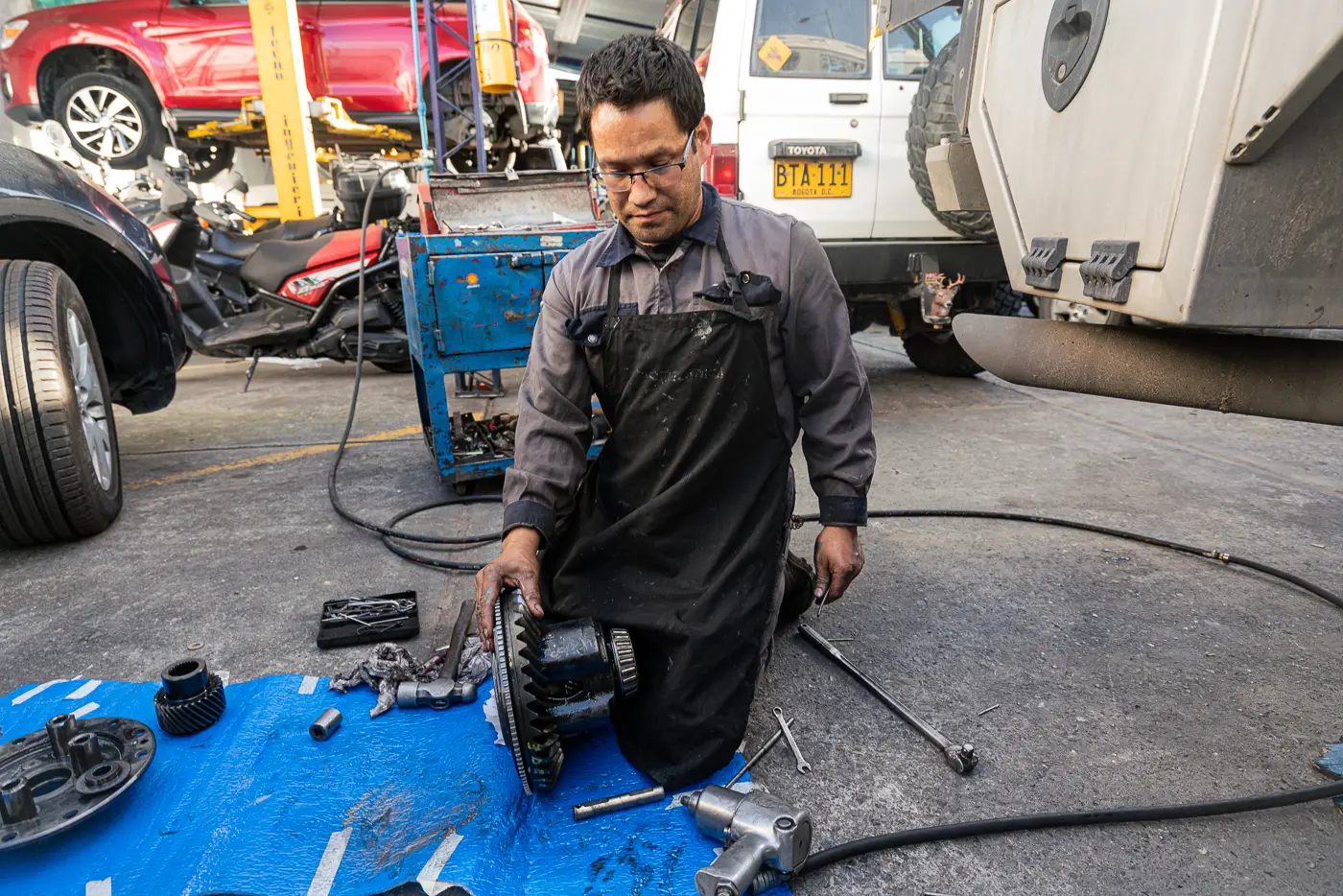
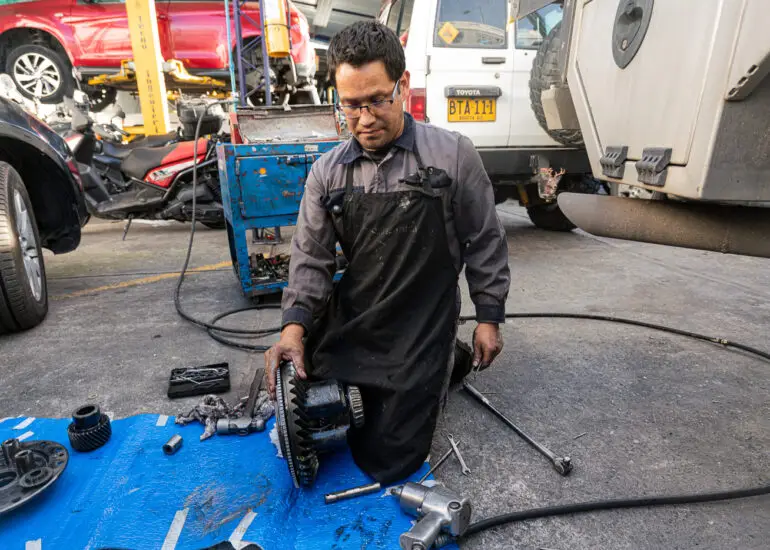
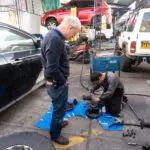
One of the things that we do when we are on the road is to get as much advice from local overlanders and other adventurous people about their favorite adventures as well as beta on campgrounds and routes. For example, when we were getting our rig repaired in a garage in Lima, we met a mechanic who introduced us to a friend of his named Piero in Cusco. On the way to Cusco, we contacted Piero and he let us stay at his house for over a week. Piero introduced us to his friends throughout South America and we ended up having some of the most epic adventures of our trip with them, including a river rafting expedition down the Apurímac River in Peru. We are still friends with Piero and his family today.
Creating a Custom GPT
As a next step, we train ChatGPT on our process. We create and train a Custom GPT called “Our Overland Expedition Trip Planner” on the type of adventures that we like to pursue and the resources that we typically use to identify these adventures. We save these instructions in a Google Doc and then cut and paste the instructions into our Custom GPT. This makes it easier for us to update our instructions (and share the updates with ChatGPT) over time. For example, here are our bikepacking instructions: “One of the things that we love doing is bikepacking. Two of the key resources that we use to identify these adventures include bikepacking.com and a book called The Bikepackers Guide to the World.” We have a ChatGPT Plus plan so that ChatGPT can learn about our planning process (if you don’t have a Plus plan, it will forget about you after each session). You’ll notice that one of our resources is a book. Since ChatGPT doesn’t have access to books, we had to take a picture of each page and upload the files into ChatGPT.
We use our Overland Expedition Trip Planner (the planner) to identify additional potential adventures in the countries we are planning on exploring. We start by uploading the list that we have already created into the planner. It already has access to the list of adventures, and we have trained it on the adventures we like to pursue and the resources that we use to identify the best ones, so it generally does a good job of identifying additional adventures. However, ChatGPT isn’t perfect so we always try to verify these adventures with other resources. For example, since Moon & Honey Travel is such a great resource for identifying hikes in the Alps, we don’t use ChatGPT to identify hikes in these regions.
Creating a High Level Itinerary
Once we have identified the adventures we want to pursue, we identify a high-level itinerary for our expedition. This is definitely something that you can use ChatGPT for, but it’s a bit of an art so we prefer to complete this step ourselves. This step is often dictated by the amount of time that we have for our overall overland expedition as well as the weather in each region at each time of year. For example, during the Pan-American, we had about a year and a half to complete the trip but chose instead to complete it in 15 months since we chose to hit Mexico after the hurricane season (December–January), Central America during the dry season (February–April), the Altiplano of Ecuador, Peru, and Bolivia during the dry season (June–October), and Patagonia during their summer (November–January).
Developing a More Detailed Itinerary
Once we have defined when we are going to be in each country, we then develop a more detailed itinerary for each country or region and save it in an offline Google Doc. This step is also a bit of an art that we prefer to complete ourselves. But we do use our ChatGPT planner as part of this step. For example, when planning our trip through Morocco, we told our planner how much time we wanted to spend in the country, what adventures we wanted to pursue (our list of top adventures), and had it create a high-level itinerary for our trip. This is an iterative process where we ask questions and make suggestions based on our own intuition and research. For example, when creating an itinerary for our trip to Morocco, ChatGPT originally recommended spending two weeks on the Atlantic Coast. But as we did research, we discovered that it was going to be difficult to find good parking, never mind campgrounds, near some of the adventures we wanted to pursue, e.g., exploring the coastal city of Essaouira. Instead, we chose to spend less time on the coast and more time in the south of the country. Here is the output of this step for one week of our trip.
Developing a Weekly Plan
Once we arrive in each country, we develop a more detailed plan for each week a week or two ahead of time, again saving this in an offline Google Doc. Specifically, we do more research into the adventures we want to pursue, where we are going to park, and where we are going to camp. ChatGPT can help with this, but ChatGPT doesn’t always have access to the web. For example, here is the high-level itinerary for one of the weeks of our trip to Morocco:
Week of March 8th – Ziz Valley and Erg Chebbi
- Explore Merzouga (3–4 nights)
Merzouga is a loose cluster of auberges, palms, and sand-front cafés strung along the eastern edge of the Erg Chebbi dunes, where Morocco’s golden Sahara begins in earnest. While the village itself has little charm, its setting is extraordinary—rising dunes start just beyond the last garden walls, making it one of the easiest places in Morocco to walk straight into the silence and surreal light of the desert. This is a place to stay still for a few days to listen to Gnawa rhythms drift from Khamlia village, share slow meals under a canopy of stars and take sunrise walks on wind-sculpted ridges. In the spring, nearby Dayet Srij lake can fill with seasonal water, attracting flamingos and migratory birds, making this one of Morocco’s best desert birding spots.
Adventures
- Complete a day trip to the Ziz Valley, including the gorges and oases (see Lonely Planet p. 162)
- Complete a sunset dune walk
- Complete an optional half-day off-road loop from Merzouga → Khamlia → Taouz → Erg Znigui → back to Merzouga (can be done with guide or 4×4 transport, or part-way by gravel bike), a dramatic route that skirts the Algerian border and includes dramatic hamada plateaus
- Complete this roadbiking route starting in Erg Chebbi
- Explore the Erg Chebbi dunes at sunrise and sunset
- Explore the seasonal salt flats (if dry), often used by locals to collect salt crust
- Have a nomadic meal experience (arrange with Auberge in Hassilabied or in the Erg Znigui region)
- See a sunset at Erg Znigui (by 4×4 or camel) – This is less visited than the main Erg Chebbi dunes and a good option if you want solitude
- Visit Khamlia, a Gnawa heritage village
- Visit the Rissani market
Camping
- Stay at an auberge with camping, e.g., Auberge Cafe du Sud, Chez les Artistes or Haven La Chance, and/or
- Stay at a campground and/or
- Wild camp south of Merzouga toward Erg Znigui (ask locals for the safest spots and avoid venturing into soft sand when scouting)
One Final Note
We always build in plenty of time to drive from one location to another and to deal with logistical issues during our trips. For example, as you can see from the example above, we only identified 3 – 4 days of activities for a week. And we inserted an entire “buffer week” for our 10 week trip to Morocco. If everything goes without a hitch, it is always easy to identify other adventures! We hope our process is helpful to you as you build your own!
Comments are closed.
adventure.wolves